What is private lodging? A simple explanation from an expert on the definition, laws, and revenue mechanisms
Updated: July 2025, 12

Experts briefly explain the definition, laws, and business structure of private lodging
Minpaku is a business model that provides lodging services using condominiums and detached houses owned by individuals and corporations.
Unlike hotels and inns, private lodging is characterized by direct transactions between hosts and guests.
In recent years, it has become easy to start a private lodging business using platforms such as Airbnb.
In Japan, the new private lodging law enacted in 2018 requires proper licensing and regulatory compliance.
Even for novice entrepreneurs, understanding specific laws and accurate procedures is important.
Take the first step towards running a private lodging business by understanding the general structure and legal requirements for private lodging.

First of all, what is a minpaku?
Private lodging refers to a form of lodging in which a portion of a home or condominium owned by an individual is rented out to tourists and short-term visitors.
The basic operating forms are ➀ those based on the special ward private lodging system, ② those based on the Hotel Business Act, and ③ those based on the Private Lodging Business Act.
The difference between private lodging and traditional lodging facilities is that they often occupy part of a regular residence.
It is essential to obtain a permit, as operating without a permit is illegal and appropriate regulations apply based on the definition of private lodging.
When considering management, it is important to check the list of special zone private lodging regulations and thoroughly understand the legal information.
When using properties such as condominiums, you need to pay attention to the use of the building and local regulations.
Illegal operations can result in severe penalties such as business suspension and fines.
It is necessary to thoroughly check the legal requirements in advance and operate the business appropriately.
Difference between “minpaku” and “minshuku”
To briefly summarize the difference between minpaku and minshuku, minshuku have historically been family-run businesses and are mainly located in tourist areas, but minpaku can also be operated in apartments in urban areas.
This allows private lodging to be operated in a variety of facilities, making it easier to expand business opportunities.
"Minpaku" and "minshuku" are often confused, but they are fundamentally different.
First of all, minshuku are officially registered as lodging businesses, and the services provided by the management are wide-ranging.
For example, it is common for guesthouses to provide meals.
On the other hand, private lodging is simple accommodation provided by ordinary households, and the services provided are often limited.
When starting a private lodging business, it is important to clearly define the facilities and services.
For example, if guests are expected to cook their own meals, kitchen facilities are essential.
Additionally, private lodging has specific laws and regulations that must be adhered to.
For example, based on the new Private Lodging Act (Private Lodging Business Act), notification and permission from local governments are required.
This allows for compliance with laws and regulations and for sound management.
Furthermore, it is necessary to consider the operational format and business benefits.
For example, providing short-term accommodation requires different operational strategies than providing long-term stays.
Differences from the rental business of apartments, condominiums, etc.
There is a clear difference between private lodging and rental rooms such as apartments and condominiums.
The rental business for apartments and condominiums is based on long-term rental contracts, and the property must function as a residence.
On the other hand, private lodging is intended for short-term stays and is aimed at tourists and those seeking short-term stays.
Therefore, when starting a private lodging business, it is necessary to improve the facilities and services for short-term stayers.
In particular, private lodging is often used as an alternative to hotels and inns.
As a result, it is necessary to improve the quality and safety of accommodation services.
Examples include providing internet connectivity, travel guidebooks, and establishing a means of communication in case of an emergency.
On the other hand, in apartments and condominiums, it is important to have facilities for daily life.
For example, it is required that the apartment is fully equipped with daily necessities such as a kitchen and washing machine.
In order to operate a private lodging facility, it is necessary to pay attention to legal regulations such as restrictions on specific uses and hygiene management.
This also allows us to take measures to prevent illegal activities and complaints.
Types of private lodging (by management type)
There are two main types of operation in the private lodging business (landlord resident type and landlord absent type).
Here, we will provide a detailed explanation of the two types of operation: the landlord-occupied type and the landlord-absent type, as well as the characteristics and laws and regulations of each.
⑴Landlord residence type
Landlord-occupied private lodging is a private lodging that is operated by the landlord while living in the same building.
This format is very popular with guests who want to enjoy a homely atmosphere, as the homeowner and guests share the same living space.
The landlord-occupied type of operation is relatively permissible by law, especially in residential areas.
Another big appeal of this management format is that you can enjoy cultural exchange through interaction with guests.
However, regulations such as the City Planning Act, Building Standards Act, and Fire Service Act must be followed.
Additionally, some local governments require specific procedures by ordinance.
There are various obligations required by law, such as reporting obligations, installing firefighting equipment, and creating a guest list.
In order to run a successful landlord-occupied business, it is important to fully understand and prepare for these legal requirements.
Main features of landlord-occupied type:
- The landlord lives in the same building
- Provides a homely atmosphere
- Legal procedures are relatively easy
- Lots of interaction with guests
The advantage for a business is that by providing a homely atmosphere, you can increase the number of repeat customers.
In addition, since we can operate for more than 180 days a year, we can expect stable profits.
You can make the most of your stay, and by using intermediary sites such as Airbnb, you can accommodate a variety of needs, from short-term stays of one night to monthly stays.
When you start operating, don't forget to obtain a registration number and take out insurance.
⑵Landlord absent type
Private lodging without a landlord is a form where the landlord does not live in the property, provides the minimum facilities, and receives guests using an automated system.
This format is often operated in a commercial manner and is a business model that seeks short-term profits.
One of the benefits of operating a vacation rental without a landlord is that flexible pricing is possible.
Prices can be adjusted according to peak or slow seasons.
In addition, operational efficiency can be increased by implementing automated systems such as smart locks and surveillance cameras.
Vacation rentals without a landlord are especially common in urban areas and are targeted at tourists and business travelers.
This form of operation is popular among guests who value the function of a lodging facility and want to respect their privacy.
However, there are strict regulations regarding operation without the landlord, and permission is required based on the Private Lodging Business Act and the Special Zone Private Lodging Ordinance.
In order to operate legally, it is necessary to comply with regulations such as the Fire Service Act and the Building Standards Act.
In addition, a license for real estate transaction business may be required.
If you operate in a metropolitan area such as Tokyo or Osaka, you will also need to comply with the ordinances of each local government.
This includes permanent emergency contact information and garbage disposal methods.
Clearing these laws and regulations is important for increasing reliability and increasing customer ratings.
Based on the above, in order to make private lodging without a landlord a success, it is essential to comply with laws and regulations and introduce an efficient management system.
Types of private lodging (by applicable law)
To start a vacation rental business, it is essential to first understand which laws you will operate under.
There are three main laws and regulations that are relevant when operating a private lodging in Japan.
First,Regulations based on the National Strategic Special Zone Law (Special Zone Private Lodging).
In this case, it applies only to specific regions and allows businesses to operate under regulations that are looser than normal hotel business laws.
However, there are conditions such as a certain number of business days and a minimum length of stay.
next,Hotel business law.
If you operate under this law, you will need a license to provide short-term accommodation services.
In order to obtain a license, you must meet strict standards regarding building equipment and hygiene management.
FinallyPrivate Lodging Business Law (New Private Lodging Law).
Under this law, a license is no longer required if guests stay within 180 days a year, but notification to the local government is required.
They also have duties such as safety management, garbage disposal, and disinfection.
Each law has its own characteristics, and the success of your private lodging business will be greatly influenced by which law you operate under.
We will explain each in detail below.
⑴Special zone private lodging
“Special zone private lodging” means a specific area =National strategic special areaThis is a system that allows private lodging operations in Japan, and was established with the aim of easing normal private lodging regulations.
It is important to follow the procedures correctly, and you must first apply for a business license.
By introducing the special zone private lodging system, cost reduction and flexible business operations will be possible.
The application process includes submitting documents to the government and verifying the safety of the facility.
This ensures proper operations and improves business reliability.
However, regulations that differ from those for regular private lodging may apply to the operation of special zone private lodging, and in order to comply with these regulations, it is necessary to keep up with the latest legal information.
Since the operation is in a limited area, careful investigation of the characteristics and demands of the area and efficient cost management are also factors that determine success or failure.
Appropriate procedures and cost management for private lodging in special zones are important points that lead to business success.
What is a “National Strategic Special Area”?
A National Strategic Special Zone is a special area where some normal laws and regulations are relaxed in order to take advantage of the region's characteristics and revitalize the economy.
In this special zone, private lodging operations are permitted under certain conditions, making it possible to relax the strict regulations of the normal hotel business law.
For example, if you are operating a private lodging business within a special zone, you will be able to be more flexible than usual in terms of property registration and facility management.
This makes it easier for entrepreneurs and people who want to start a new business to reduce the risk of initial investment.
Furthermore, the requirements and conditions for designation as a National Strategic Special Zone can be found on the Cabinet Office website, so it is important to thoroughly research and prepare in advance.
In special zones, special measures are being taken to increase the number of foreign tourists, so business opportunities for running a private lodging business will expand.
As mentioned above, by utilizing National Strategic Special Zones, you can effectively develop your private lodging business while being subject to legal relaxation measures.
Advantages and disadvantages of special ward private lodging
The advantages of operating a private lodging in a special zone are that compared to the regular hotel business law, operations can be started with simpler procedures, and there are fewer operating costs and efforts.
Special zone private lodging has low initial costs and allows for rapid entry into the market.
We can also expect to utilize tourism resources that take advantage of the local characteristics.
For example, by incorporating the region's unique culture and events, you can provide a unique experience for tourists, which can lead to repeat visits and positive word-of-mouth.
On the other hand, the disadvantage is that special zones have a limited range of designated areas, so business is only permitted in certain areas.
Therefore, if you wish to expand your business outside of the special zone, additional procedures are required.
Furthermore, each special zone must comply with different regulations and conditions.
In particular, you should always check and comply with local government regulations and conditions.
In addition, since special zone private lodging is aimed at short-term stay guests, there is also the constraint that it is difficult to meet the demand for long-term stays.
To accommodate long-term stays, you may need to consider alternative operating formats or additional services.
Related article
⑵Hotel Business Law Private Lodging
Hotel Business Act Private lodging must comply with regulations based on the Building Standards Act.
First, when starting a private lodging business, you must make sure that the facility complies with the Building Standards Act.
This is because we place importance on safety, such as fire prevention, earthquake resistance, living environment, and securing evacuation routes.
Furthermore, administrative procedures are required to change the use of private lodging facilities, and this must also comply with the Building Standards Act.
The Hotel Business Act also provides detailed regulations on how private lodging facilities are operated.
For example, detailed operational standards have been established for guest list management, infectious disease control, cleaning and garbage disposal systems, etc.
In addition, each municipality has different ordinances and regulations, so it is important to check and comply with local laws and regulations.
It is also necessary to perform appropriate facility management based on the Building Standards Act.
For example, facilities are required to undergo regular safety inspections and maintenance of necessary equipment to maintain them in perfect condition.
In this way, in order to successfully operate a private lodging business based on the Hotel Business Act, it is essential to thoroughly understand and comply with the Building Standards Act and related laws and ordinances.
What is “Inn Business”?
"Inn business" is a service industry that operates accommodation facilities and provides bedding to guests.
Private lodging based on the Hotel Business Act must obtain a business license under the same standards as regular hotels and inns.
In order to obtain this permit, health and safety standards must be strictly adhered to.
Private lodging is also a business that provides temporary lodging for tourists and business visitors.
However, it is common to use residences such as condominiums, and there is a restriction under the regulations for private lodging that the number of days provided per year cannot exceed 180.
When conducting business in compliance with the Hotel Business Act, the quality of the facility environment and service is required.
Specifically, this includes installing fire extinguishing equipment, regular cleaning, pest control, and safety checks.
By meeting these legal requirements, we are able to provide a safe and comfortable accommodation environment.
Cases where a hotel business license is required
Private lodging is an accommodation service in which individuals temporarily provide their homes or real estate to travelers.
This business model has gained attention in recent years as it allows for flexible and diverse lodging experiences.
However, in order to legally operate a vacation rental, you must comply with several laws and regulations.
One of these is the Hotel Business Act, and a hotel business license may be required based on this law.
Specifically, this applies to cases where accommodation operations are conducted for a certain period or more throughout the year, or cases where the scale of the facility is large.
For example, this applies when five or more rooms are provided in one building, or when the area of common areas exceeds a certain standard.
If these conditions apply, the operator must obtain an inn business license from the local public health center.
The application procedure includes detailed document submission and on-site inspection, so sufficient preparation is required in advance.
The vacation rental business is flexible and diverse, but failure to comply with legal requirements can hinder operations.
Therefore, it is important to check the specific conditions and obtain the appropriate permits in advance.
Related article
⑶ New private lodging law
The new private lodging law is a new form of private lodging based on the existing Hotel Business Law and Private Lodging Business Law.
This law allows individuals to provide short-term accommodation services for up to 180 days a year.
This is a legal reform for businesses that use residential buildings to provide accommodation to travelers.
The new private lodging law is attracting attention as a way to respond to the growing demand for lodging, especially in urban areas.
The appeal is that you can easily start a business by making the necessary notifications according to the law.
Additionally, administrative procedures have been simplified compared to the existing Inn Business Act, which has expanded the opportunity for first-time entrepreneurs to operate lodging facilities relatively easily and legally.
However, when operating, it is necessary to comply with local ordinances and guidelines.
For example, noise and garbage management, relationships with neighboring residents, etc. must also be considered.
It is important to check the various rules in advance so that you can respond quickly and flexibly.
Related article
What is the “Private Lodging Business Law”?
The "Private Lodging Business Law" is a law that came into effect in 2018, and is commonly referred to as the "New Private Lodging Law."
This law establishes standards for legally providing accommodation services using housing.
The main requirements include operating for no more than 180 days a year, providing prior notification, and establishing an emergency contact number.
This law was introduced to strengthen the crackdown on unlicensed businesses and illegal lodging facilities and ensure the safety of tourists.
To begin implementing the new private lodging law, businesses must notify the prefectural governor.
Compared to the strict licensing system under the Hotel Business Law, this procedure is simpler and allows you to start a business with relatively low risk.
On the other hand, private lodging in special zones can operate for more than 180 days a year, which is advantageous for business development in areas with a thriving tourism industry.
Advantages of private lodging as a new business
Private lodging has attracted a lot of attention in recent years, and offers great business opportunities, especially in the tourism industry.
By starting a private lodging business, you can adopt a different management style from traditional hotel management.
For example, by using a list of private lodging facilities in Japan and platforms such as Airbnb, you can approach new customer groups.
In addition, private lodging can be started at a low cost and has the potential to maximize profits by offering a variety of accommodation plans.
In addition to these characteristics of minpaku itself, several macro-environmental factors listed below also provide tailwinds for the minpaku business.
Increase in inbound
Japan is extremely popular as a tourist destination, and the number of foreigners visiting Japan is increasing every year.
Although it temporarily decreased in 2020 due to the impact of the new coronavirus, it has been on the rise again in recent years.
Against this background, the private lodging business has great advantages by taking advantage of the increasing trend of foreign tourists.
Foreign visitors to Japan are looking for a variety of accommodation facilities, and unique private lodging is very attractive.
In this regard, vacation rental owners can have a competitive advantage by offering unique lodging experiences.
Additionally, providing a local experience that is different from a hotel is highly valued by foreign tourists.
For example, providing decorations and services that incorporate local culture and customs, as well as options such as local guides, can give foreign visitors a deep sense of satisfaction.
Lack of accommodation
Nowadays, convenient hotels are often fully booked, not only in tourist destinations but also in large cities.
Lack of accommodation becomes a problem, especially during busy seasons and major events.
This is a great opportunity to start a vacation rental business.
Private lodging can effectively fill this demand and can be very useful in regions and seasons where lodging is often in short supply.
Additionally, vacation rentals are highly valued by tourists and businesspeople because they offer flexible accommodation options.
However, when starting a private lodging business in an urban area, you must pay attention to local regulations regarding land use planning and changing the use of buildings.
In particular, properties located in residential areas are required to take thorough noise and safety measures to avoid trouble with neighboring residents.
Increase in vacant houses
In recent years, the number of vacant houses in Japan has been increasing, especially in rural areas, due to the declining birthrate, aging population, and urbanization.
You can use these vacant houses to start a private lodging business as a new source of income.
One way to operate a private lodging business is to renovate vacant houses and provide them as lodging facilities.
This method not only contributes to the revitalization of the local economy, but also allows you to receive support and subsidies from local governments.
Plus, you can showcase your unique charm by offering guests a taste of local culture and a homely atmosphere.
When starting a vacation rental business, it's important to understand the current laws and regulations and follow local regulations.
It is necessary to carefully complete the permitting procedures and prepare to start business legally. Through this, we can earn long-term, stable profits and contribute to the local community.
Regulations regarding private lodging
When working on the private lodging business, it is important to understand the regulations and laws in Japan.
If not managed properly, it can lead to legal penalties and impact the credibility of your business.
Private lodging operations are required to comply with the Private Lodging Business Act, etc. that I introduced earlier.
Based on these laws, it is necessary to obtain a business license, and business without a license is severely punished.
Additionally, the Private Lodging Business Act limits the number of business days per year for private lodging operators to 180 days or less.
Additionally, you are required to notify the public health center and create and maintain a guest list.
Violation of this may result in fines.
In addition to the "common rules" mentioned above, some regions have their own local regulations.
For example, some cities, such as Tokyo and Osaka, have their own ordinances that may impose stricter regulations.
In some areas, businesses are only allowed to operate on weekends.
The Fire Service Act is also an important regulation.
Private lodging facilities are required to install firefighting equipment and an emergency notification system.
Violation of this may result in suspension of business or penalties.
Related article
What happens if you operate a business without a license (illegal)?
There are serious risks and penalties for operating a vacation rental business without a license.
When operating a private lodging facility, it is necessary to obtain permission and notification.
Operating without a license is considered illegal and may lead to trouble.
Specifically, unlicensed private lodging violates the Hotel Business Act and risks administrative penalties such as fines and business suspension orders.
Furthermore, if illegal business activities are discovered, the risk of not only intervention from government agencies but also complaints and lawsuits from nearby residents increases.
Not only can this damage your business's credibility, but it can also expose you to costly liability.
Furthermore, providing accommodation services without permission cannot ensure the safety and security of guests, leading to negative reviews and a decline in reputation.
Therefore, it is important to operate legally, obtain the necessary permits, and provide a safe and comfortable lodging experience for travelers.
By operating a legal vacation rental business, you can not only expand your business with peace of mind, but also build good relationships with the local community.
Summary
Private lodging is a business model that is attracting attention in the lodging industry as tourism demand increases.
The private lodging business has a variety of operating formats, and each type has its own laws and regulations.
In particular, Japanese law requires compliance with the Private Lodging Business Law and the Hotel Business Law.
Furthermore, each city has different ordinances and guidelines, so a detailed understanding is essential.
Business benefits include the effective use of vacant properties and the provision of personalized services.
However, there are also issues such as avoiding trouble with neighboring residents and managing operating costs.
In order to succeed in the private lodging business, it is important to have a thorough understanding of the legal procedures and to clarify the operating format and business strategy.
Please refer to this article and get ready to take on the challenge of the private lodging business.
Leave the procedures for your private lodging business to us!
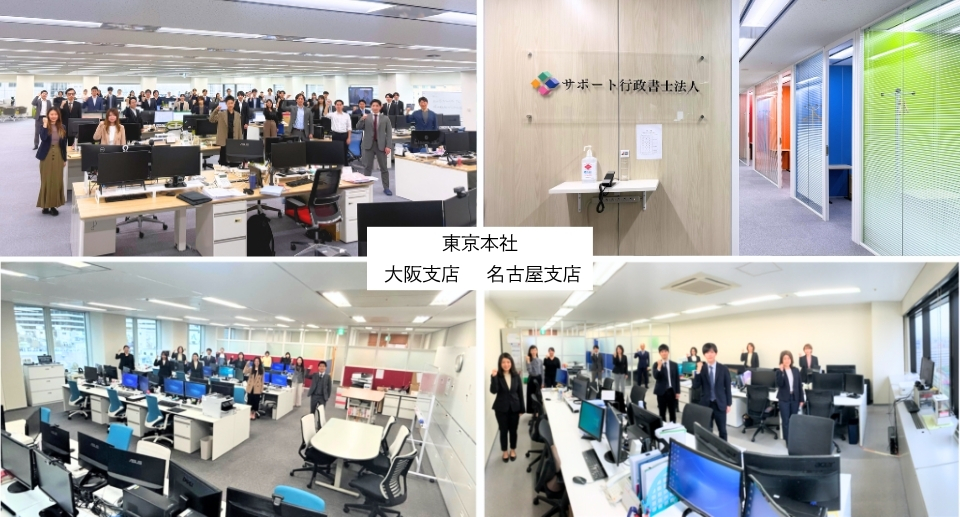
At Support Administrative Scrivener Corporation, we provide business license application support and highly specialized consulting to both those newly entering the private lodging business and existing businesses.
Private lodging business licenses are under the jurisdiction of each health center, and each health center has its own local rules.
Our staff has a track record of applying in all prefectures across the country. Please contact us by all means.
Our dedicated staff handles cases nationwide.
Click here for detailed support information