Handling and storage of hazardous materials
Updated: July 2025, 1
What are dangerous goods?
Definition of dangerous goods
Dangerous materials in a broad sense refer to high-pressure gas, radioactive materials, explosives, poisonous materials, etc., but in simple terms, dangerous materials as defined by Article 2 of the Fire Service Act include:Items with a high risk of fire outbreakIt is classified as follows.

Examples of familiar hazardous materials
Hazardous materials under the Fire Service Act are
① Things that help other substances burn in addition to ``flammable things,'' ② Things that ignite when water is poured on them, ③ Things that spontaneously combust.
However, the most familiar dangerous substances are ``flammable liquids,'' which are classified as category 4.
Examples include fuels such as gasoline, kerosene, and diesel oil, as well as products such as nail polish, nail polish remover, adhesives, fire starters, paint, and hair spray.
Concept regarding hazardous materials
Specified quantity
"Specified quantity" is the quantity determined for each type of hazardous material.If you want to store more than that amount, you must obtain permission to establish a storage facility.
It is a borderline that is said to be.
The specified quantity is determined as shown below depending on the type, name, and nature of the hazardous material.

<A small quantity of dangerous goods>
Dangerous goods in quantities that are 1/5 or more of the specified quantity but less than the specified quantity are called small quantities of dangerous goods.
The difference is that "hazardous materials" exceeding a specified quantity are regulated by the Fire Service Act, but small quantities of dangerous materials are regulated by the ordinances of each municipality.

Permits/Notifications for storing hazardous materials in warehouses
Conditions requiring permission/notification
When storing hazardous materials, depending on the conditions
① If permission is required
②When notification is required
③ Cases where neither permission nor notification is required
there is. This condition is determined by storage and handling quantities.

Hazardous materials handler system
Facilities that store hazardous materials in excess of the specified quantity must have a hazardous materials handler (nationally qualified).
indoor storage
A facility that stores or handles hazardous materials in an indoor location is called an indoor storage facility.
Standards for indoor storage
Detailed standards are set for hazardous materials storage facilities that require a permit depending on the conditions.
General standards are set out below.
<Owned vacant land>
Retained open space refers to an area of a certain width with no objects placed around a hazardous material storage warehouse to extinguish fires and prevent the spread of fire in the event of a fire.
The width of the open space that should be provided around the storage warehouse is determined by how many times the specified quantity of each item is to be handled.

① Bulletin board
A sign indicating that the storage facility is indoors must be placed in an easily visible location, as well as a bulletin board with necessary information regarding fire prevention.
②Eave height
Indoor storage must be a one-story building with a height (eave height) from the ground level to the ground level of less than 6m.
However, if it is a warehouse that only stores Class 20 or Class XNUMX hazardous materials, the eave height limit will be less than XNUMXm.
③Structure of walls, columns, and floors
Storage warehouses must have fireproof walls, columns, and floors.
④Beams/exterior walls
Beams must be made of non-combustible materials.
In addition, external walls that pose a risk of fire spread must have no openings other than entrances and exits.
⑤ Roof structure
Roofs must be made of noncombustible materials, covered with metal plates or other lightweight noncombustible materials, and ceilings must not be installed.
However, the following cases are exceptions.
・For indoor storage of only Class 2 hazardous materials: The roof can be made of fireproof construction.
・For warehouses that store only Class 5 hazardous materials: Ceilings made of flame-retardant or non-combustible materials can be installed.
⑥Windows and entrances
Fire prevention equipment should be installed at the windows and entrances of storage warehouses, and entrances and exits installed on exterior walls where there is a risk of fire spread should be installed.
A self-closing specified fire protection system that can be opened at any time must be provided.
Also, if glass is used, it must be wired glass.
⑦Floor area
The floor area of indoor storage must be less than 1,000 mXNUMX.
⑧Lighting and ventilation
Storage warehouses must be equipped with the necessary lighting, lighting and ventilation facilities.
⑨Lightning protection equipment
Indoor storage facilities that handle more than 10 times the specified quantity must be equipped with lightning protection equipment such as lightning rods.
⑩ Steam exhaust equipment
When handling hazardous substances with flash points below 70℃, the above discharge equipment must be installed.
Procedures for storing dangerous goods

Application for temporary storage and handling of dangerous goods
Application for permission to establish a hazardous materials storage facility
Application for permission to establish a transfer handling center
Advantages of requesting our application agency
★Extensive track record in permitting and licensing industrial waste and hazardous materials
Our company has handled a wide variety of licensing matters.
When making a request, we will provide everything from preparing application documents to business consulting.
As professionals in administrative procedures, we will assist you all at once.
★Take care of the troublesome procedures on your behalf
Interviews with the government, creation and input of application forms, etc.
We will take care of the troublesome application procedures on your behalf.
We will smoothly apply for your company's grant application.
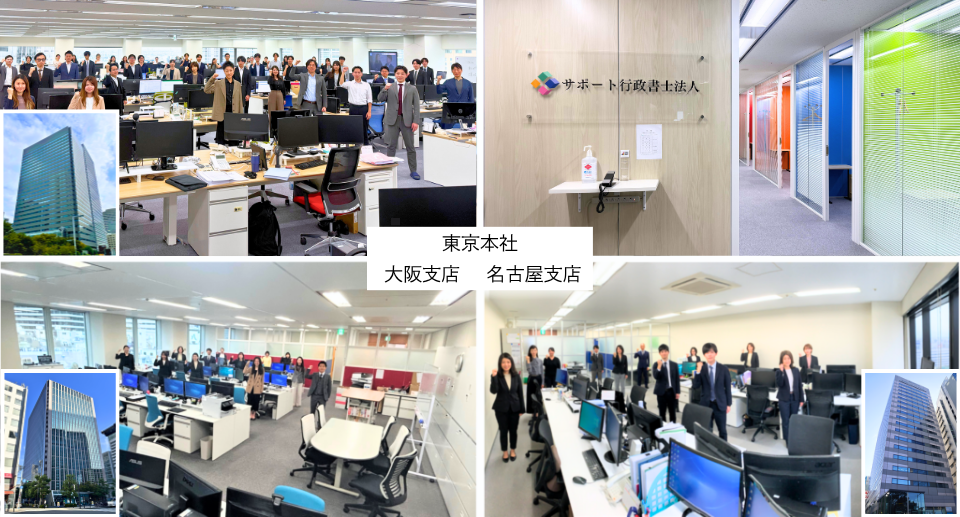
★Available nationwide, with a large number of staff working as a team!
Our company operates nationwide, mainly in the urban areas of Tokyo, Nagoya, and Osaka.
In addition, since a large number of staff work as a team,
We can quickly handle even complex procedures.
Q & A
What is a hazardous materials facility?
A facility that stores and handles hazardous materials in excess of a specified quantity.
According to laws and regulations, they are classified into manufacturing facilities, storage facilities, and handling facilities.
When storing dangerous goods under the Fire Service Act, is it necessary to store them in a hazardous goods warehouse under the Warehousing Business Act?
It depends on the amount handled.
When storing hazardous materials under the Fire Service Act, when handling more than the amount required for permission (designated quantity),
It must be stored in a hazardous goods warehouse for warehousing operations.
Nationwide Support